White House Plumbers
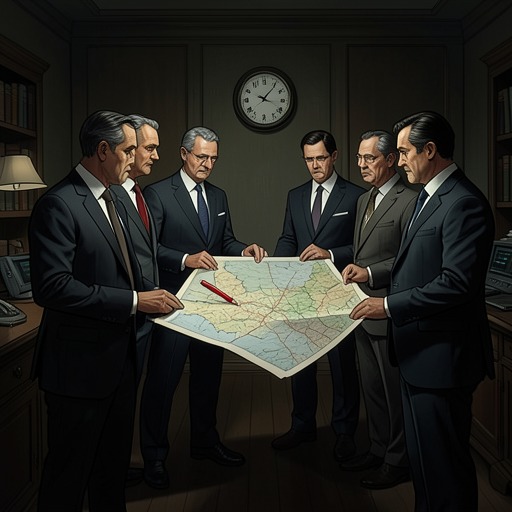
All the President's MenThe White House Plumbers was a secret White House team charged with investigating leaks to the news media. Its work began with efforts to trace disclosures of the Pentagon Papers and expanded to other suspected leaks; later reporting linked its members to national-security wiretap transcripts. The organization’s significance lies in that widening path: a unit created to find and contain disclosures became a source of evidence about surveillance, the handling of political intelligence, and the larger Watergate-era system of secrecy.
Origins and Mandate
The team’s initial assignment, as described by its former secretary Kathleen Chenow, was to compare The New York Times’ account of the Pentagon Papers with the documents themselves. The administration then sought to determine how the papers had reached the press. That inquiry started the search for leaks. For a time, the team examined disclosures from the State Department, tracing embassy cables and trying to establish whose desks they had passed across. Chenow recalled that much of E. Howard Hunt’s work she saw concerned State Department cables he had reviewed for their relation to the Pentagon Papers.
The inquiries did not remain confined to that episode. Chenow recalled that the team also checked Jack Anderson’s columns about the administration for possible leaks. A Justice Department official, Robert Mardian, came down to the team’s basement office two or three times during that period. The range of these activities suggests an operation that treated public reporting and government disclosures as connected investigative problems, even as the particular subject under scrutiny shifted from the Pentagon Papers to other material appearing in the news.
Personnel and Reporting Lines
Chenow identified the Plumbers as Hunt, Gordon Liddy, David Young, and Egil Krogh. She had been Young’s secretary: he had previously served as an appointments secretary to Henry Kissinger and was on loan from Kissinger’s office to John Ehrlichman’s staff. Young made regular reports to Ehrlichman on the progress of the team’s investigations; Krogh was one of Ehrlichman’s principal deputies. The evidence thus places the unit within a White House staff structure, with its leak inquiries reported upward to Ehrlichman rather than treated as an independent operation.
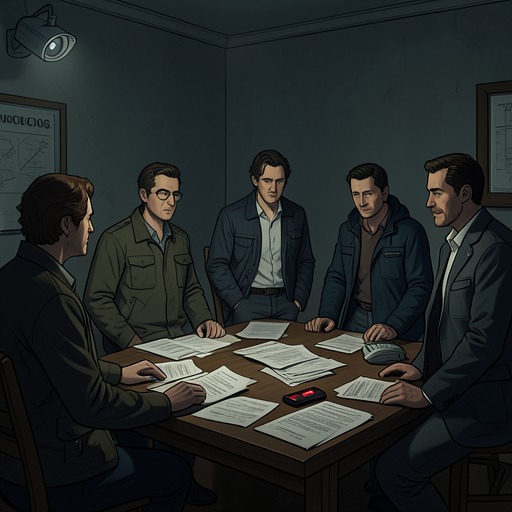
The team worked in a basement office in the Old Executive Office Building, across from the White House. A telephone record helped reporters locate the office’s institutional traces: a line had been installed in room 16 on August 16, 1971, and disconnected on March 15, 1972, under Chenow’s name and home address. Chenow had moved to Milwaukee, and a directory search led the reporters to a former roommate before they reached her. The otherwise obscure phone listing became a route into the organization’s identity and history.
Methods and Expanding Scope
The Plumbers’ documented work involved examining leaked or potentially leaked information and tracing its circulation. Chenow’s account of embassy cables and the Pentagon Papers gives a specific picture of that task: investigators reviewed government materials and tried to reconstruct how information had moved between offices. The search for leaks also extended to published columns, placing scrutiny not only on the original disclosure but on subsequent reporting that might reveal sources or additional information.
Later, two White House staff sources gave the reporters matching accounts that Young had regularly routed transcripts of wiretapped conversations to Hunt and Liddy during 1971 and 1972. Both sources thought reporters, and people suspected of leaking to them, might have been tapped. Those accounts connected the Plumbers to surveillance information, although the evidence described here does not establish that every suspected journalist was in fact monitored. The distinction matters: the transcripts’ reported passage through Young to Hunt and Liddy is a specific claim about information flow, while the sources’ belief about reporters being tapped remains a suspicion.
That reported pipeline also placed the team’s work against the administration’s broader national-security wiretap policy, known as the Mitchell Doctrine. The Justice Department had used electronic eavesdropping without court authorization against people suspected of domestic subversive activity until the Supreme Court declared the practice illegal on June 19, 1972, two days after the Watergate arrests. The Plumbers’ reported receipt of wiretap transcripts therefore widened the significance of its leak investigations: the issue was no longer only how the team pursued disclosures, but whether information gathered through surveillance entered that work.
Exposure and Significance
The team became important to the Watergate investigation as reporters tried to establish what Hunt and Liddy had done while working at the White House. A source who had spoken with Krogh recalled that Hunt and Liddy were being routed information from national-security wiretaps shortly after their indictments. When the reporters sought confirmation from Chenow, she declined to discuss the tapped data Young had forwarded. Her earlier account had identified the team and its original assignment; her later refusal marked a limit on what she would confirm about its surveillance-related work.
In late 1972, a source identified only as Z urged the reporters to consider several senior figures together and described disclosure as the common thread in their conduct. Z said that the effort to keep information contained persisted after the Watergate break-in, characterized the Plumbers as relevant to activities reaching further back than the Pentagon Papers, and urged the reporters to investigate how many more members there had been. These remarks were investigative leads and a source’s interpretation, not a complete organizational roster or independent proof of every alleged connection. They nevertheless show how the Plumbers’ name had come to frame a broader inquiry into leak investigations, funding, and political operations.
The book’s account also distinguishes the existence of the team from the responsibility of the wider institutions around it. Hunt and Liddy were identified as Plumbers and were among those indicted, while Young’s reported routing of transcripts and the regular reports to Ehrlichman point to lines of access and supervision. The available evidence makes the Plumbers more than a label for two operatives: it presents a small, identifiable White House unit whose leak investigations intersected with surveillance and whose records and personnel offered reporters a way to follow those connections. It does not, by itself, establish that every Watergate action was directed by the team or that every senior official shared the same knowledge.